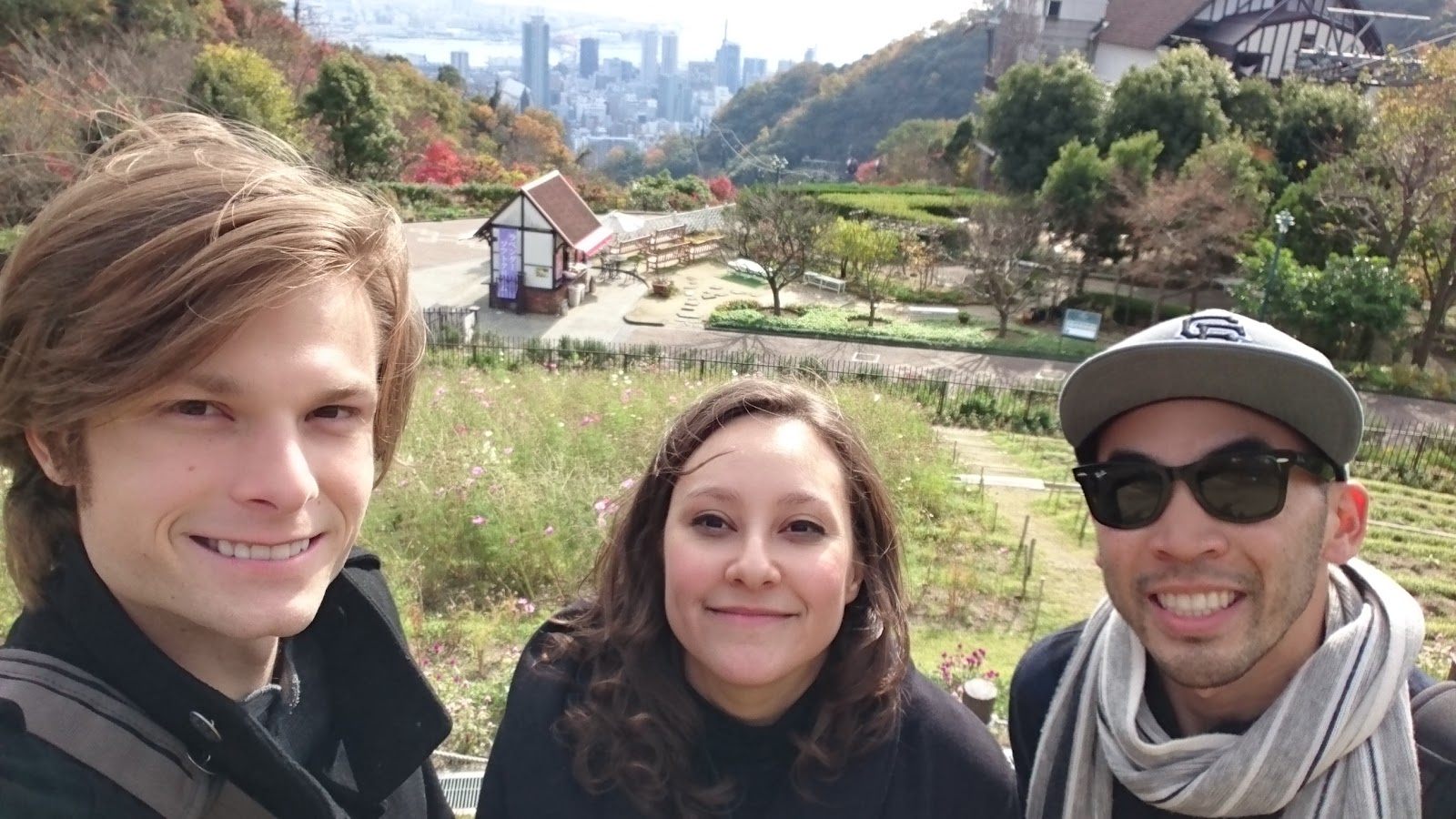
My school has 5 departments, each devoted to a particular vocation. We have M (industrial machinery), I (IT/graphic design, etc,), F (farming), G (gardening), and H (pre-med/hospice care). Each of these respective departments have specific utilities for their fields of study. We have a farm adjacent to our school, a whole floor of computer labs, large scale machinery, a food processing plant, and a group kitchen, just to name a few facilities. I recently got to use the group kitchen/cooking classroom to make Christmas cake, which is THE thing in japan to celebrate Christmas (that and KFC, their marketing team really set a trend). Other notable parts of my school is that it has 2 gymnasiums, one which has a rock wall and judo mat, as well as a kyudo range.
Like all Japanese schools, there is no insulation or central heating. My school recently had some heaters installed which make the teachers room a bit more bearable, but it is getting cold. During the winter it is totally normal for the nurse to wander the school and check the CO2 levels in the classrooms, since students shut all the doors and windows to keep heat in at the risk of suffocation. I was told this scenario is a combination of traditions from older Japanese style buildings (which were never designed with insulation in mind, but rather to have good airflow for the hot summers) and respect for taxpayers (since I guess warmth is not a necessity for education).
I am one of busier ALTs in the country. I teach 3 classes a day, I teach all 3 years (most ALTs do not teach 3rd years), and I have 19 different classes I teach. I make 4 lesson plans about every 10 days or so, and I also run an English chat time Thursdays called English Cafe where we play card games or other activities. While I am technically 'team teaching', I plan and lead the whole lesson during that day. So I enjoy teaching in the classroom itself, but lesson planning can be a little mentally exhausting. But the students' attitudes definitely brighten my day and keep me upbeat during my time at work.
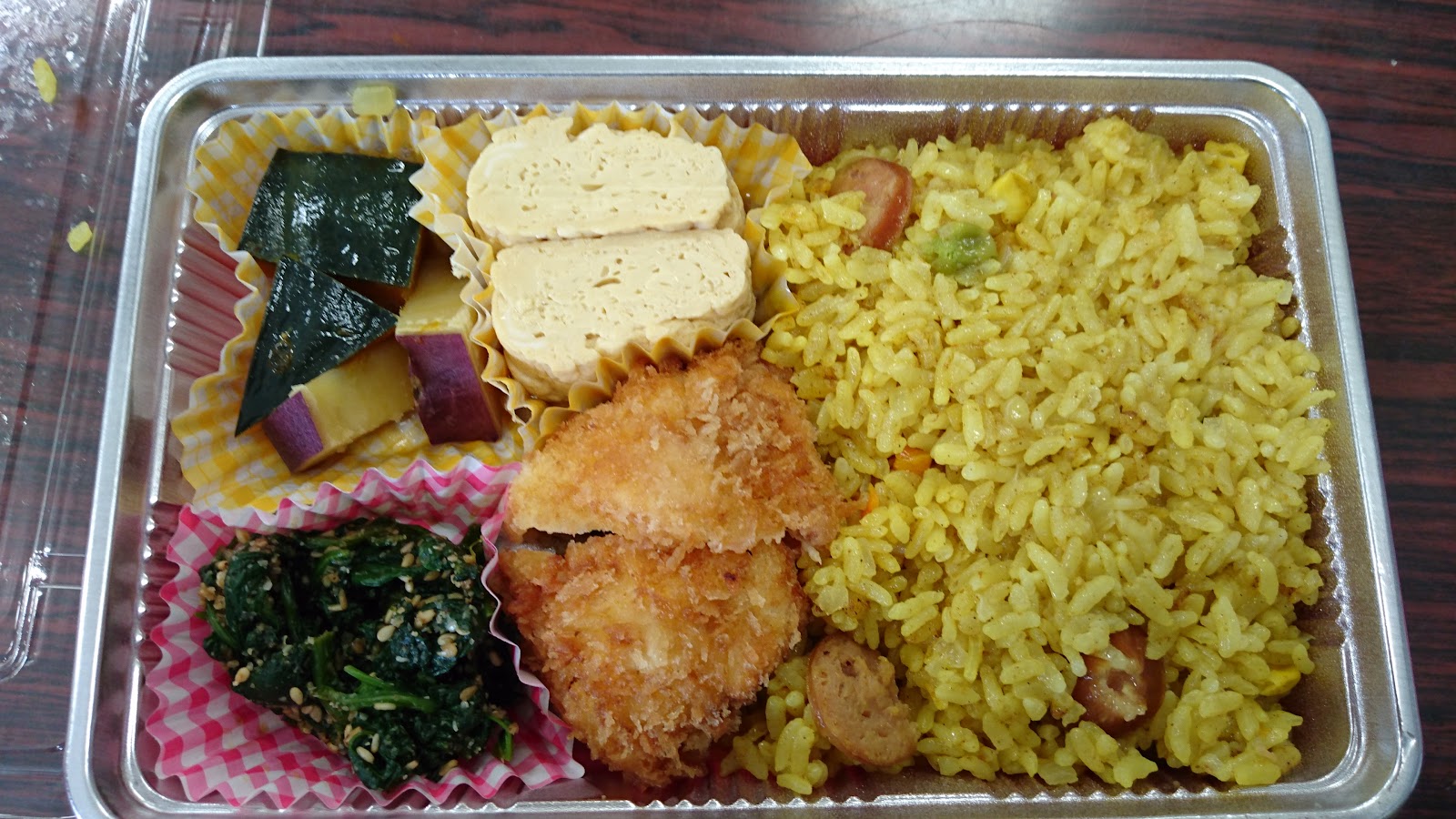

So I am never alone in a classroom, I am always team teaching with a Japanese Teachers of English (JTE). The three JTEs who I team-teach with have very unique personalities. My main supervisor, Mori-sensei, is a quirky, positive, funny yes-man. His unabated positive attitude is an uplifting presence to be around. Higari-sensei is a teacher I mesh particularly well with in class, so she is great to work with. And my last teacher, Fujiwara-sensei, takes work seriously and has been a valuable coach for learning how to teach English.
Fujiwara-sensei and the librarian, Maeda-sensei, are the teachers I see the most. I go to the library's office for lunch to microwave my food, as well as to speak to the students during lunch break. Every once in a while students will be shuffled in by a teacher and forced to talk with me. While they may be forced, these interactions have been the most impressive moments of English speaking I have had with my high schoolers, who often times can't even get past the question 'how are you?'. In this scenario the students get the opportunity to try using English without the influence of the classroom, so they manage pretty well in basic conversation. This is not to say that all students dislike speaking English. There are a few students who have gone out of their way on the train to speak with me, and others who enthusiastically greet me in the hallways at school.
Interacting with the two library teachers has also been great learning experiences for me, since they are constantly volunteering information about Japanese customs. Upon returning to Japan from winter break, they gave me mochi traditionally eaten during the new year, as well as explained the bamboo planters that popped up all over town (including in front of our school). These arrangements are akin to Christmas trees, they serve to welcome the new year, and the holes in the bamboo are dwellings for spirits/gods to reside in. We often trade knowledge, since they also take time to ask me about American customs, as well as English phrases and words.
Interacting with the two library teachers has also been great learning experiences for me, since they are constantly volunteering information about Japanese customs. Upon returning to Japan from winter break, they gave me mochi traditionally eaten during the new year, as well as explained the bamboo planters that popped up all over town (including in front of our school). These arrangements are akin to Christmas trees, they serve to welcome the new year, and the holes in the bamboo are dwellings for spirits/gods to reside in. We often trade knowledge, since they also take time to ask me about American customs, as well as English phrases and words.
Speaking of speaking, one of the adjunct teachers, and elderly gentleman named Shimizu Tatsuo goes out of his way once a week to speak to me about current affairs he saw on the news in English. Prior to meeting with me he writes out what he wants to say in a notebook as a starting point for discussion. I am floored by the amount of effort he puts in just to have a casual conversation with me, and it's a unique treat to have political and social discussions in English. Also, recently Kawaguchi Tomoka, a Machine teacher and former student of Fujiwara-sensei, has been coming to the library to practice English with me, while I practice Japanese with her. Over just the past few weeks her English has greatly improved, which is probably just due to her confidence being built during our interactions.
All of my other coworkers are nice, although they do not speak English much, nor do I make the time to try and converse with them myself, are very cordial with me. Yet on two different occasions I have been invited out to dinner with some small groups of teachers. These have been great moments to interact with my teachers, since I am no longer preoccupied with work. I have also gotten the chance to learn a bit more about my teachers, who are pretty interesting people.

 At the end of the year is also the bonenkai, the equivalent of a company's end of the year party. Ours was held at our city's famous ryokan Kozeniya, conveniently located 3 minutes away from my apartment. In a large room we were served an exquisite multiple course Japanese style meal with unlimited beer and sake (and soft drinks for the drivers). These work parties are an integral part of Japanese culture; it is when everyone unwinds and builds better relationships with their coworkers. I once again got the chance to speak with many teachers I had not spoken to prior. Later into the meal we played the most intense game of bingo I have ever been a part of for some fun prizes. It was amusing to see some of the more conservative teachers come out of their shells, and for the outgoing teachers go all out. There was shouting, victory speeches, and (because Japan) janken for prizes. Japan plays bingo a bit differently too. When you are one away from bingo you yell 'reach!' and stand up. I think this really added to the intensity of the atmosphere, that or the alcohol. After dinner had finished, we had the option to go to the ryokan's onsen, famously used by a past emperor of Japan during his time in Tottori. The bath was a great way to unwind and relax after a rather exciting dinner and demanding workweek.
 Outside of school I occasionally have run English camp events for the prefecture, where students from around the city come for a weekend of English-centric and cultural activities. Recently was a Halloween one where we even got to carve our own pumpkins.
As a JET there are also occasional conferences for us. One being a skills development conference which helped us learn some useful teaching skills from one another. The other was a cultural exchange conference where we spent the day with Japanese college students trying our hand at Japanese cultural activities. I myself played Karuta, an old Japanese card game requiring listening and reading skills as well as quick reaction times, and Kasa Odori, the Shan Shan umbrella dancing. Later that night, the Association of JETs also planned a fun trivia night for all of us. I am impressed by how JET makes an effort to foster a community for its many ALTs across the country.
The city I live in, Tottori-shi, is rather convenient for daily living. I like to say it has 'just one' of everything. I live in a small, rather dated apartment complex with all of the other ALTs, but everything is just serviceable. It is also right in the center of town. I am close to a discount grocery store, a small AEON mall (think department store with a grocery store and McDonald's, these are very common, basically what Sear's used to be decades ago) and a couple other grocery stores. I am walking distance from our train station, restaurant/bar district, and I am biking distance from everything else I could need, game stores, dry cleaners, second hand stores (which are really nice out here), and even notable onsen. I am also very close by to the city's main street, which has a variety of shops. At the end of that road is castle ruins and a short scenic hike I have yet to do. And about 30 minutes away by bike is the 'big' park meadows-esque shopping mall. My city also hosts a massive sports complex across town where the Jamaican track team trains every year before international competitions, but it is a bit far for me to frequent.
My city also offers free English lessons at the library, which has a wing at the airport once a week. I work with Takashi Saito, a science teacher in the city who has an amazing handle on English. The library offers a lot of services for foreigners, and I really have only taken advantage of the one. But it is great because it has helped motivate me to become more competent with Japanese. Often times I have been far too lazy or preoccupied to devote the amount of time necessary to really become competent. I regret doing, so next year I will make a greater effort.
 My weekly routine is fairly simple. Since my apartment is a tiny 1K (1 room and a kitchenette), cooking takes up a lot of my time. I wake up early and make breakfast and lunch for the day, go to work, run some sort of errand, eat dinner, have maybe 2 hours of free time, sleep, and repeat. So even though I live in an apartment with many other English teachers, I don't often make time to see them. Most of them go out to the local bar right down the street quite frequently. The bar, Shubi-du-Bar, is owned by our landlord's son, Taiyu. Taiyu is a cool guy with an amazing talent to remember anyone's name. I will occasionally go myself, because he serves one of the best hamburgers I have ever eaten.

 My local haunt is a Japanese curry restaurant called Moona. Located right behind my apartment, I hop a low wall to make my weekly curry run. My favorite meal, pika curry, is a rather unique dish. The best way I can describe pika is that it is incredibly juicy, soft, fatty ends of pork that usually are thrown away instead of eaten. You don't chew pika, it melts in your mouth, and is most definitely my favorite food. In addition to great food, the owner, Yasuaki, is super cool and quirky. He is part of that really cool all black shan shan group I mentioned in one of my first blogs (you can find it here), crazy permed hair, and an obsession with fishing. After becoming a regular, he first told me about a secret menu item he occasionally stocks, which is a particularly fatty beef curry. Just the other day I saw him making a stock, so I asked him about it. It turned into a 20 minute conversation where he explained the whole process of making his curry, and even showed me his secret recipe of spices. It takes 10 hours to make the ru (curry sauce), with 8 being the stock simmering, followed by stir frying onions and blending in spices, yogurt, and tomatoes all together. You can taste the effort and attention to detail in his meals. We have also gone for drinks with him and another regular. After a few hours of fun attempted conversation at a nearby bar, he covered all of our tabs!
My city also offers free English lessons at the library, which has a wing at the airport once a week. I work with Takashi Saito, a science teacher in the city who has an amazing handle on English. The library offers a lot of services for foreigners, and I really have only taken advantage of the one. But it is great because it has helped motivate me to become more competent with Japanese. Often times I have been far too lazy or preoccupied to devote the amount of time necessary to really become competent. I regret doing, so next year I will make a greater effort.


 My local haunt is a Japanese curry restaurant called Moona. Located right behind my apartment, I hop a low wall to make my weekly curry run. My favorite meal, pika curry, is a rather unique dish. The best way I can describe pika is that it is incredibly juicy, soft, fatty ends of pork that usually are thrown away instead of eaten. You don't chew pika, it melts in your mouth, and is most definitely my favorite food. In addition to great food, the owner, Yasuaki, is super cool and quirky. He is part of that really cool all black shan shan group I mentioned in one of my first blogs (you can find it here), crazy permed hair, and an obsession with fishing. After becoming a regular, he first told me about a secret menu item he occasionally stocks, which is a particularly fatty beef curry. Just the other day I saw him making a stock, so I asked him about it. It turned into a 20 minute conversation where he explained the whole process of making his curry, and even showed me his secret recipe of spices. It takes 10 hours to make the ru (curry sauce), with 8 being the stock simmering, followed by stir frying onions and blending in spices, yogurt, and tomatoes all together. You can taste the effort and attention to detail in his meals. We have also gone for drinks with him and another regular. After a few hours of fun attempted conversation at a nearby bar, he covered all of our tabs!
 By school is the fantastic Japanese style family-owned restaurant Sarashina. While technically an izakaya (restaurant bar, the most common kind of restaurant in Japan), Sarashina serves delicious, locally sourced food in gorgeous arrangements. While the main dishes always are the same, the variety of sides change with what's currently in season in Tottori. The chef, Takashi, is a cool guy in his 40s who speaks absolutely no English. His mother however, does have a surprisingly strong English vocabulary, but no grammar knowledge. The chef's wife, Maki, speaks the best English because she teaches English at a Kumon nearby, so I was invited by her to join her friend Kumi for lunch a bit ago at a restaurant close to my school. Kumi is well traveled, so it was great to speak with her about other places I should go in Japan. This family also prepared a fantastic meal for my friends and I when they visited Tottori, at an incredible discount. Very recently, the family invited me to join them for dinner an a quick trip to the nearby Hyouki onsen. Every onsen I have been to is different, it seems they try to implement unique features to draw customers. This one had a large, waist deep walking pool, and fake waterfalls you could sit under which loosened my shoulders up quite a bit. It was equally fun and challenging to communicate entirely in Japanese for hours, but the family is very nice and genuinely interesting. I learned when Takashi was my age, he took a motorcycle and did a road trip all the way up to Hokkaido one summer. I look forward to asking him more about it! While I know it's mostly because I am a rather stereotypical foreigner, it has been great to be able to build relationships with so many nice people here in Japan.

 So even while I don't see other ALTs throughout the week. The AJET branch of Tottori (a volunteer association of ALTs) has also been organizing a variety of events for us. In November one JET hosted a thanksgiving potluck, where someone actually managed to get a turkey. The swimming hole blog was an AJET event (you can read it here) At these events many of the ALTs from across the prefecture to socalize along with local Japanese friends. They are always great events and I am really glad they get put on.
 Some of these locals I have managed to keep in contact with. Erika, whom I have gone to the beach and explored Osaka with, I of the first AJET event. Another guy, Yasu runs a local sporting goods store in close proximity to my apartment. He studied abroad in the US, and he often comes to AJET events to keep his English fresh. I went out and joined him and his friends the other night, one of whom ended up being a teacher from my school. Small town, small world. This teacher, Norio Uemura, has never spoken English to me, yet that night I learned he worked in America for Ford Motors many years ago, and that his listening and reading comprehension are quite high.
So yeah, hopefully you make it all the way through this and that I have given you a good glimpse of my true life in Japan. If you want to see some more snapshots of life in Tottori, here's the extensive gallery: